

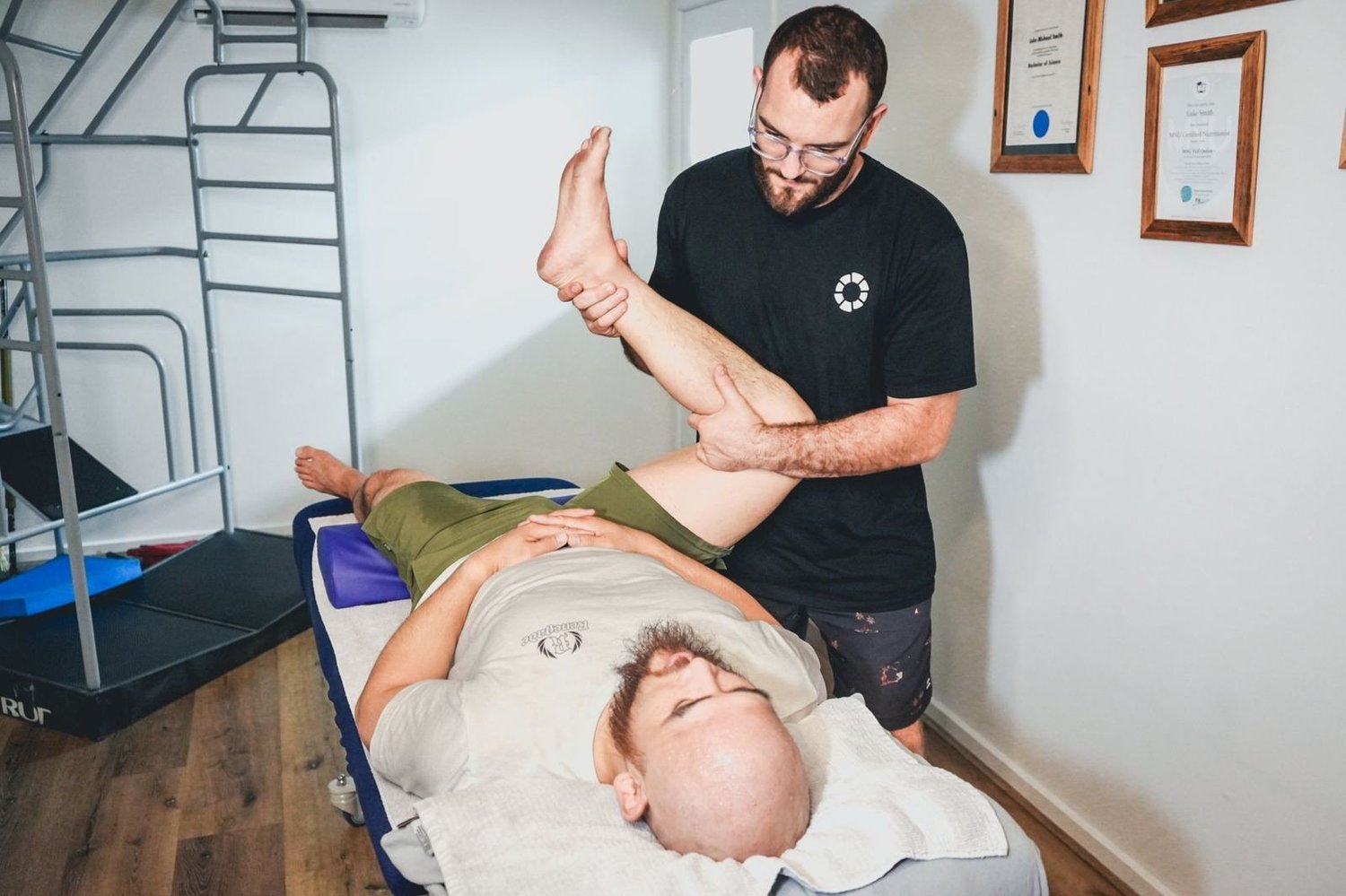
Footy and soccer injuries
Hamstrings, groins, ankles and knees, from pre-season through to finals.
- No referral needed
- Book directly. Claim on the spot with eligible private health extras.
- Open six days
- Monday to Friday 8am–7pm, Saturday 8am–2pm.
- First visit
- Allow 45 minutes to an hour. Wear shorts and a loose top.
- Rear entrance
- 92 Parsons Street, Kensington, inside Renegade BJJ.
Field sports load the body in bursts
Australian rules and soccer ask a lot of the body in short bursts: sprinting, kicking, landing, changing direction and taking contact, often after a working week sitting down. Most of the injuries we see come from one of those moments, or from the training load around them changing quickly, as it does in pre-season and at the start of the season.
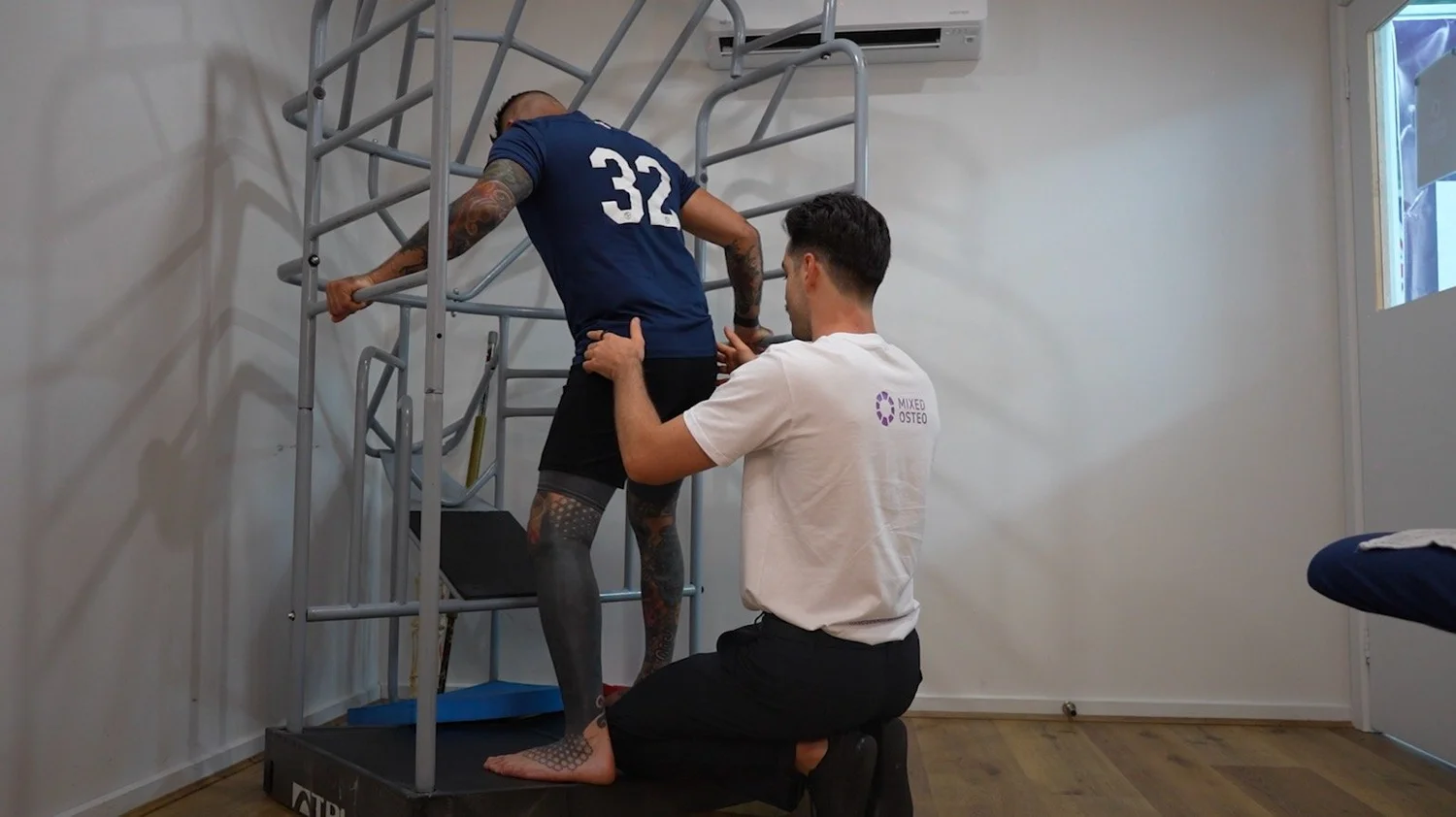
Assessment looks at the injured area and at the movements your sport actually asks of it. Where it's safe to, the plan keeps you training in some form while the injury settles, then builds back through running, change of direction and kicking before you return to full training and games.
We see local club players, social and masters teams, and people who just want to get through a Sunday kick-about without pulling something.
What we see most
Hamstring strains
A sudden grab at the back of the thigh while sprinting or reaching for the ball. The most common soft-tissue injury in both codes.
Groin and adductor pain
Pain in the groin or inner thigh, often building over weeks with kicking, sprinting and change of direction.
Ankle sprains
Rolling the ankle on landing, in a tackle or on uneven ground.
Knee ligament injuries
Inner knee sprains from contact or twisting. After a knee reconstruction we work alongside your surgeon's rehab protocol.
Corked thighs
A heavy knee or knock to the front of the thigh that leaves it stiff, bruised and hard to bend.
Quad and hip flexor strains
Pain at the front of the thigh or hip, often from kicking.
Shoulder injuries from contact
Sprains at the top of the shoulder from falls and tackles.
Lower back pain
Back pain in kickers and in players building up running load.
Head knocks go to a doctor
If you have had a knock to the head and have any symptoms, such as a headache, dizziness, feeling foggy, nausea or changes to your vision, you need to see a doctor. We don't assess or manage concussion, and we don't clear anyone to return after one. Follow your doctor and your league's concussion guidelines.
Call 000 or go to an emergency department if you have:
- Lost consciousness, have repeated vomiting, worsening headache, confusion or a seizure after a head knock
- Neck pain with numbness, tingling or weakness after a collision
- A limb that looks deformed, or you can't take weight on it
See your GP first if:
- You heard a pop and the knee swelled quickly, or it keeps giving way
- A corked thigh is getting more painful and swollen over the following days rather than less
- Pain in the groin or lower abdomen that comes with a lump, or with coughing
If anything in your assessment points to a doctor, we'll tell you and explain why, rather than treat.
How a return to footy or soccer usually runs
Each stage depends on how the injury responds the next day, not just on how it feels at the time.
Settle it
Ease pain with hands-on treatment, and adjust training so you can keep doing what doesn't aggravate it.
Restore movement and strength
Range of movement and strength in the injured area, built up until it handles load comfortably.
Running and change of direction
Straight-line running, then faster running, then cutting, turning and landing.
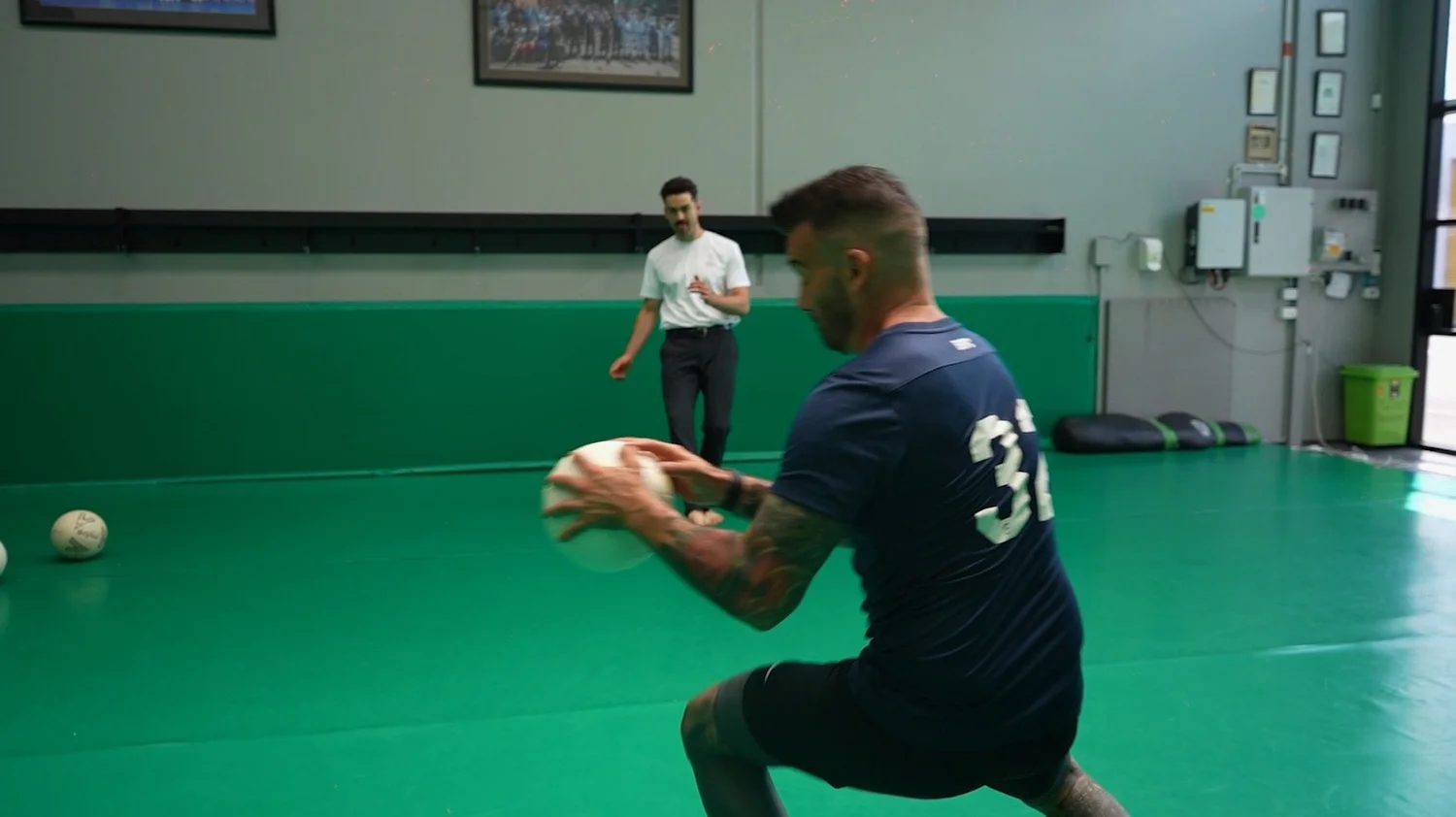
Kicking and skills
Kicking distance, contested work and sport-specific drills, built up gradually.
Full training, then games
Full training before match play, with the timing agreed with you and, where relevant, your club's medical staff.
How long does it usually take?
Typical ranges, not promises. Severity, position and the time of season all make a difference.
| Situation | Early change | Typical return to play |
|---|---|---|
| Corked thigh | 3–7 days | 1–3 weeks |
| Ankle sprain | 1–2 weeks | 2–6 weeks |
| Hamstring strain | 1–2 weeks | 3–8 weeks |
| Inner knee sprain | 1–3 weeks | 3–8 weeks |
| Shoulder sprain from contact | 1–2 weeks | 2–6 weeks |
| Groin and adductor pain | 2–4 weeks | 4–12 weeks |
| After a knee reconstruction | Led by your surgeon's protocol | Usually 9–12 months or more |
Questions people ask
Should I play through it?
It depends on the injury. Some can be managed while you keep playing with a few changes, and some will get worse and keep you out longer if you push through. We'll go through which one you've got and what the trade-off looks like.
Can I keep training while it settles?
Usually in some form. Most players can keep up fitness, upper-body work or parts of training while the injured area recovers. We'll go through what's fine to keep doing.
Do I need a scan?
Many footy and soccer injuries don't need imaging to be managed well. If your symptoms suggest a fracture, a significant ligament injury or something else that needs a closer look, we'll refer you to your GP.
Can you help with pre-season?
Yes. We can help you build running and strength load sensibly through pre-season, and work through niggles before they hold you back.
Injured and want to get back out there?
Book an assessment in Kensington. No referral needed.