

Running injuries
Shins, calves, heels, knees and hips that have stopped enjoying the extra kilometres.
- No referral needed
- Book directly. Claim on the spot with eligible private health extras.
- Open six days
- Monday to Friday 8am–7pm, Saturday 8am–2pm.
- First visit
- Allow 45 minutes to an hour. Bring the shoes you run in.
- Rear entrance
- 92 Parsons Street, Kensington, inside Renegade BJJ.
Most running pain is a load problem
Running injuries rarely come out of nowhere. Most build up when the amount, speed or type of running goes up faster than the body has had time to adapt to it: a new program, a race block, more hills, a switch of shoes, or simply getting back into it after a break.
That is good news, because load is something you can change. The aim is usually to keep you running in some form while the sore area settles, rather than stopping completely and starting again from scratch.
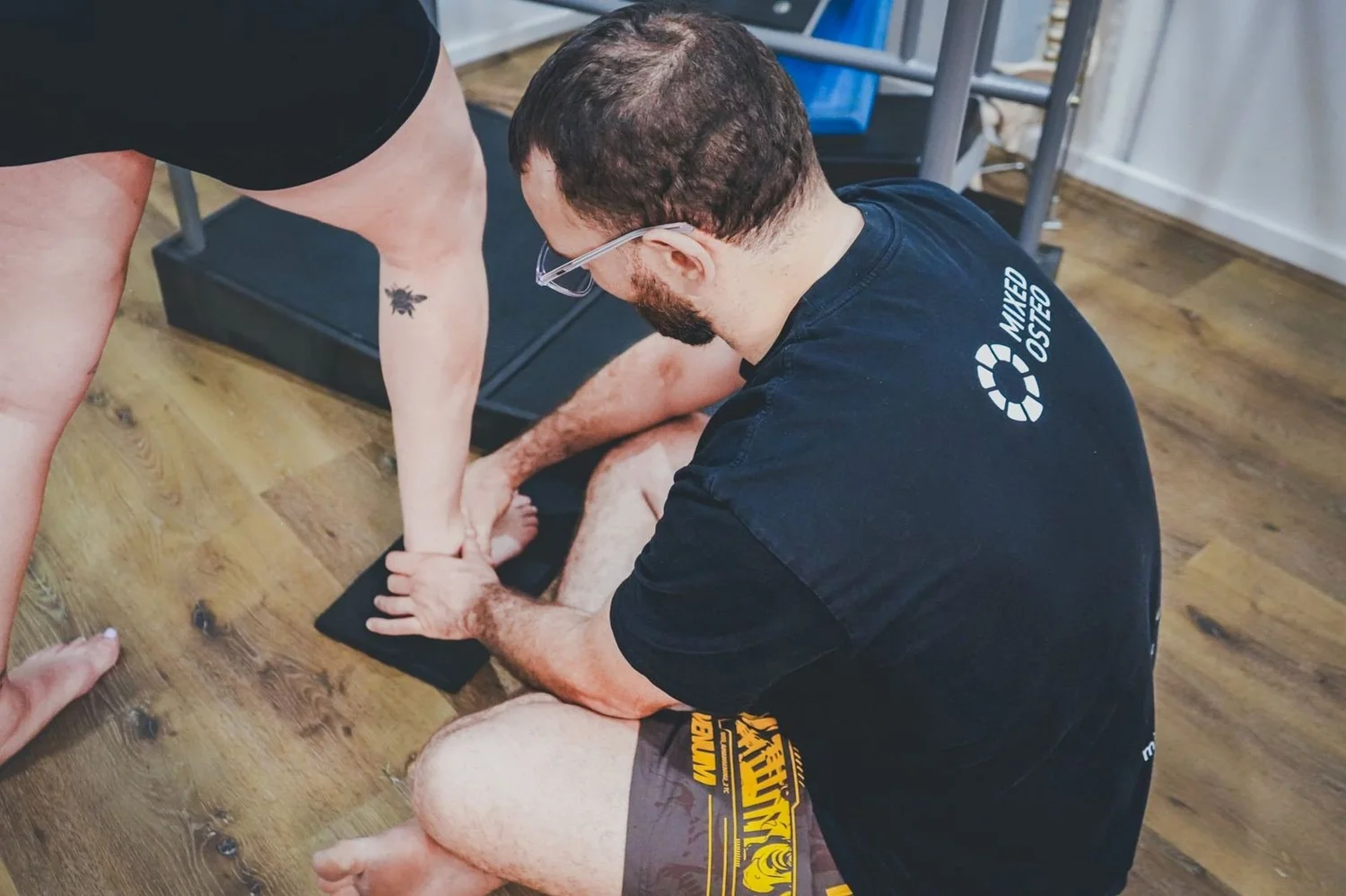
Assessment is done standing and moving as well as on the table. We look at the sore area, but also at how your hips, knees, ankles and feet cope with single-leg work, and at what your training has looked like over the last couple of months.
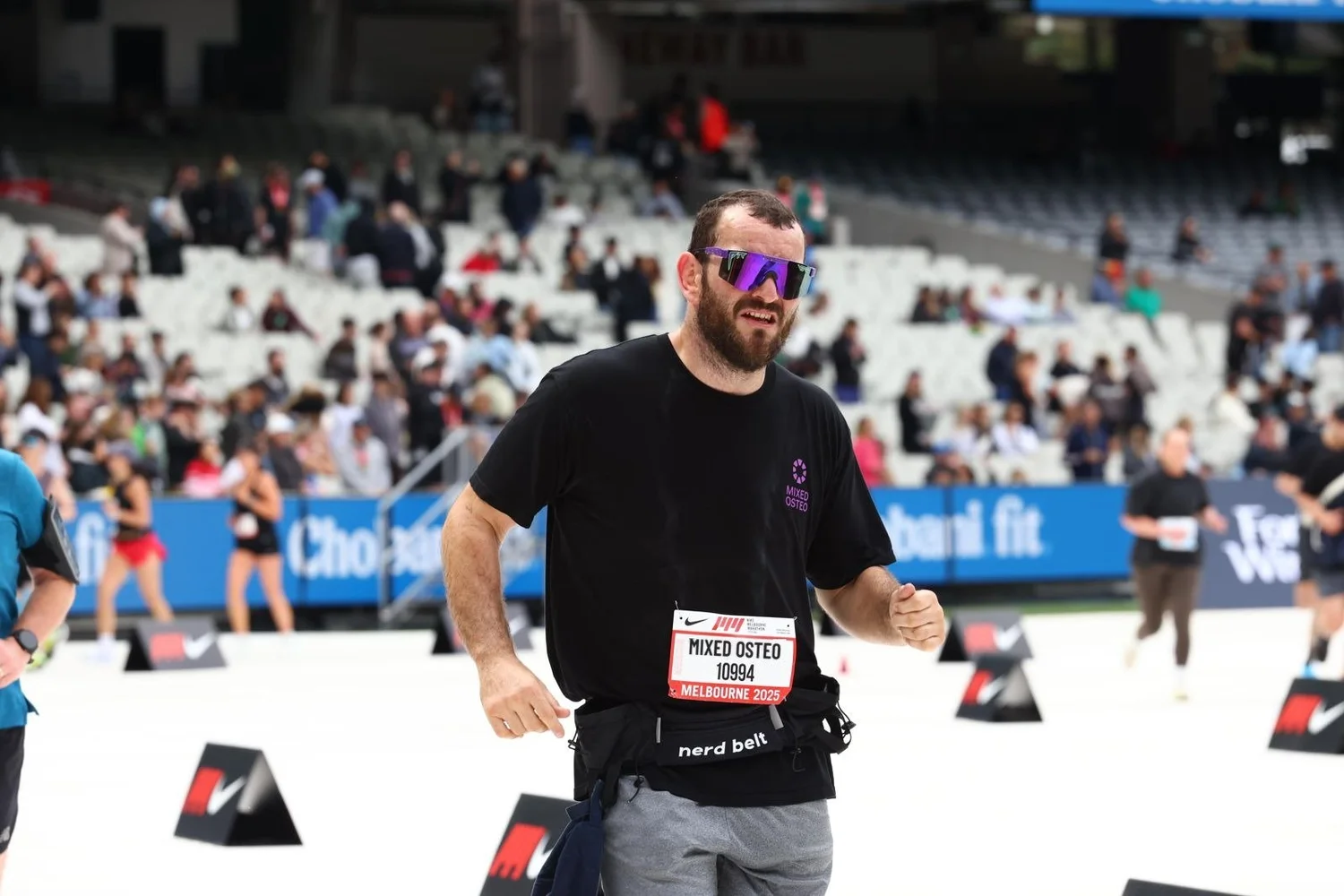
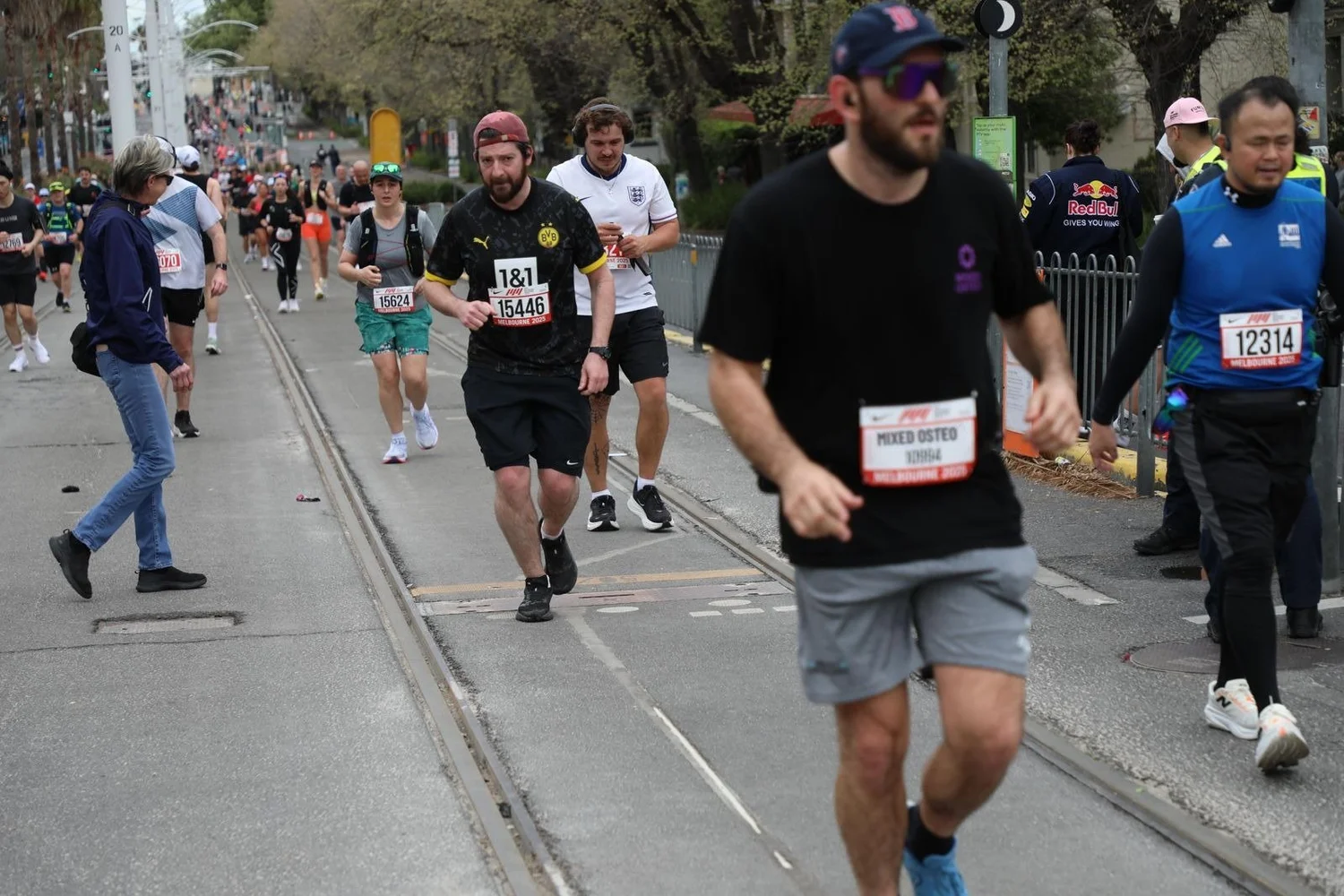
Luke runs too, and ran the 2025 Melbourne Marathon, so a big training block and what it does to the legs is familiar territory.
We see runners from Kensington, Flemington, North Melbourne and the surrounding suburbs, many of whom train along the Maribyrnong River trail, the Moonee Ponds Creek trail and around Royal Park.
What we see most
Shin pain
Aching along the inside of the shin that comes on with running, often after a jump in kilometres. Pain that is sharp, pinpoint on the bone, or getting worse run to run needs checking for a bone stress injury.
Achilles pain
Stiffness and pain in the Achilles, usually worst first thing in the morning or at the start of a run. Common after adding hills, speed work or more volume.
Calf strains
A sudden grab or tightness in the calf mid-run, often in older runners and on faster sessions.
Heel pain
Pain under the heel, usually worst with the first steps in the morning or after sitting. Often called plantar fasciitis.
Pain around the kneecap
An ache around or behind the kneecap that is worse on hills, stairs and after sitting. Often called runner's knee.
Outer knee pain
Sharp pain on the outside of the knee that comes on at a predictable point in a run. Often put down to the ITB.
Hip and buttock pain
Pain on the outside of the hip or deep in the buttock, often worse lying on that side. Common in runners building distance.
Lower back stiffness
Back pain that builds through longer runs, or flares the day after a long one.
When to see a doctor first
Call 000 or go to an emergency department if you have:
- Chest pain, unusual shortness of breath, or you feel faint or collapse while running
- A limb that looks deformed, or you can't take weight on it after a fall or twist
- Calf pain and swelling, especially after surgery, a long flight or a period of not moving
See your GP first if:
- Pain is pinpoint on a bone, gets worse with each run, or aches at night. This can be a bone stress injury and may need imaging.
- You've had more than one bone stress injury, or your periods have stopped or become irregular while training hard
- Pain at night or at rest that doesn't ease, or unexplained weight loss
- Numbness, pins and needles or weakness in the leg
If anything in your assessment points to a doctor, we'll tell you and explain why, rather than treat.
How a return to running usually runs
Each stage depends on how the sore area responds the next day, not just on how it feels during the run.
Settle it
Change what flares it for a while: less volume, flatter routes, fewer fast sessions, or cross-training on the bike or in the pool. Hands-on treatment to ease pain.
Build strength and capacity
Calf, hip and thigh strength, and single-leg control, built up until the sore area handles load without flaring.
Return-to-run program
Walk-run intervals on flat ground, increased in small steps across the week.
Build volume back
Continuous running and longer runs, changing one thing at a time: distance, then frequency, then terrain.
Speed, hills and racing
Intervals, hills and race-specific sessions come back last, once volume is steady.
How long does it usually take?
Typical ranges, not promises. How long you've had it, and how much you keep running on it, both make a difference.
| Situation | Early change | Typical recovery |
|---|---|---|
| Shin pain (no bone stress injury) | 2–4 weeks | 6–10 weeks |
| Calf strain | 1–2 weeks | 2–6 weeks |
| Pain around the kneecap | 2–4 weeks | 6–12 weeks |
| Outer knee pain | 2–4 weeks | 6–10 weeks |
| Achilles pain | 2–6 weeks | 3–6 months |
| Heel pain | 2–6 weeks | 3–6 months |
| Hip and buttock tendon pain | 2–6 weeks | 3–6 months |
| Bone stress injury | Managed with your GP | Usually 6–12 weeks or more before full running |
Questions people ask
Do I have to stop running?
Often not completely. Many running injuries do better with running reduced and adjusted than with complete rest. We go through what you can keep doing, what to hold off on, and what to use instead, such as cycling or swimming.
Do I need new shoes or orthotics?
Not usually as a first step. A recent change of shoes can be part of the story, so bring the pair you run in. If something like orthotics looks worth trying, we'll explain why, or refer you to a podiatrist.
Do I need a scan?
Most running injuries don't need imaging to be managed well. If your symptoms suggest a bone stress injury or something else that needs a closer look, we'll refer you to your GP for imaging.
I've got a race coming up. Can you help?
We can help you plan the weeks before it around the injury: what to keep, what to drop, and how to taper. Whether racing is sensible depends on what's going on, and we'll be honest with you about that.