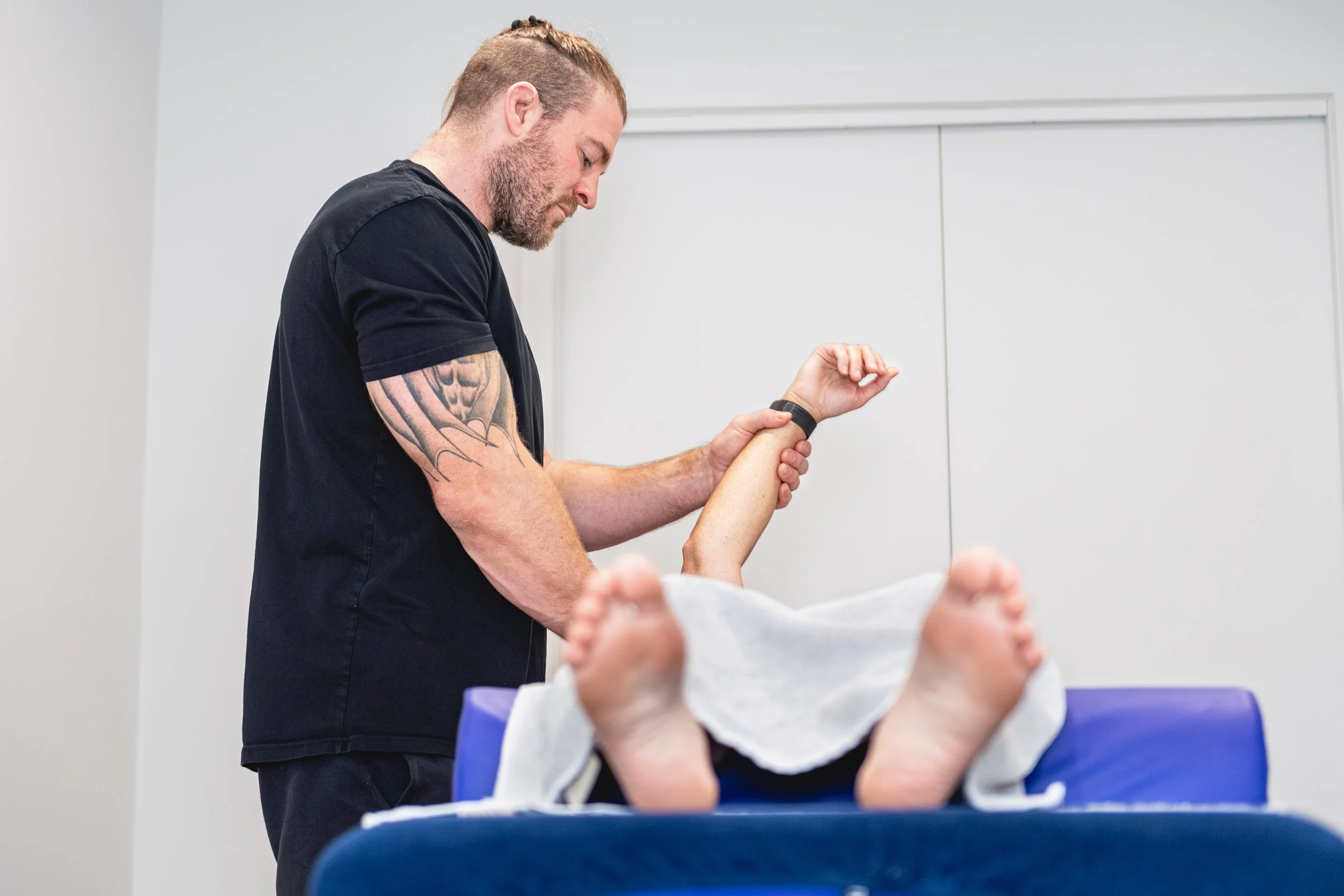
The Truth About "No Pain, No Gain" Massage Advice
It's a common assumption: the more it hurts, the more it's working. In practice, that's not really how remedial massage works — and chasing pain can do more harm than good.
Where the idea comes from
Firm pressure on a genuinely tight area can be uncomfortable, and people sometimes associate that discomfort with effectiveness. But discomfort is a side effect of working on tension, not the mechanism that resolves it.
What pain actually tells you
Gritting your teeth through excessive pressure usually means your body tenses up in response, which works against what the treatment is trying to achieve. Useful discomfort is manageable and something you can breathe through. Anything sharper than that is worth mentioning — not enduring.
Communicate, don't tough it out
Pressure is adjustable throughout a session. Speaking up when something's too much gets you a better outcome than staying quiet and hoping it's "working."
Soreness afterwards
Some mild soreness in the day or two after a firmer session is normal, similar to how a solid training session can leave you sore. It shouldn't be sharp or worsening — if it is, that's worth raising with your therapist.
Book with Nick
Every session is shaped around your comfort and what you're trying to achieve, not a fixed pressure level.
Book online or call the clinic on (03) 4054 1621.